
Easy Peasy You
No more perioral dermatitis: skin care after zero therapy
Posted by Lara Schimweg on
Contents
Relief after the zero therapy
Basic routine: After the zero therapy, start slowly and mindfully with a minimalist routine.
Strengthen the skin barrier : Use gentle, skin-like ingredients such as ceramides and squalane.
Proceed step by step : Introduce moisturizers, active ingredients, and peels slowly and one after the other.
Patience and consistency : A simple routine and patience lead to healthy skin in the long run.
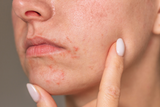
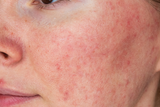
You've finally completed the zero-therapy phase – a crucial step in clearing your skin of perioral dermatitis . This skin condition, often called "stewardess disease" or "mouth rash," is caused by over-treated skin that reacts to too many skincare products, highly concentrated active ingredients, and external stressors with redness, dryness, small bumps, and usually a light-colored triangle around the mouth. Now that your skin has calmed down, a minimalist and gentle skincare routine is essential. Strengthen your skin barrier to prevent relapses. Here's how to bring your skin back into a healthy balance, step by step.
In zero therapy, you stop using all skincare products and cleanse your skin only with water . If you are still in the acute phase or would like to learn more about zero therapy or perioral dermatitis, you will find helpful tips for this intensive period in our articles.
 Perioral dermatitis zero therapy: The only solution to get rid of over-cared-for skin forever
 Perioral dermatitis: causes, symptoms and treatment
Skin care after zero therapy
Pay close attention each day to how your skin reacts to your skincare routine. It's possible you started too soon. If so, take a step back.
Remember: Your skin's tolerance threshold is now extremely low, and you should definitely take this seriously. Only then will your skin be able to fully calm down again. It's better to persevere for a few months now than to constantly have to deal with this irritated skin. Unhealed perioral dermatitis always recurs. That's why, even after the initial treatment, it's crucial that you establish a healthy and irritation-free skincare routine to prevent a recurrence.
1) Build a compatible base routine
Once your perioral dermatitis has subsided, it's crucial to prevent any further irritation. Even after it has healed, perioral dermatitis can unfortunately recur if you use the wrong products or too many of them.
Make sure you introduce your skincare routine gradually. One product at a time. Give your skin some time to adjust to new products. Depending on your history, it may have gone without skincare for a while. That can also be quite an adjustment for your skin.
"One product at a time"
Observe how your skin reacts to changes and act accordingly. If it worsens significantly again, take a small step back and try again in the next few days. You might experience a few breakouts after being so dry. Everyone's skin reacts differently, and the skin cycle lasts at least 28 days. Keep that in mind. If you follow the tips when building your skincare routine and don't experience any severe rashes, itching, pain, or inflammation, things will surely improve quickly. Build a healthy and minimalist skincare routine.
In general, you should pay attention to these ingredients in the future:
- Fragrances : Irritate the skin and can trigger allergies.
- Essential oils : Can irritate sensitive skin and cause contact allergies.
- Alcohol : Dries out the skin and weakens the skin barrier (except for fatty alcohols, which are very well tolerated).
- Highly concentrated active ingredients : Introduce ingredients such as retinol or vitamin C only gradually and in low concentrations.
- Acidic peels : Avoid strong AHA/BHA peels that overload the skin.
Here are a few tips for each step of your basic routine:
Gentle cleansing after perioral dermatitis
If you used a mild cleanser during the zero-treatment phase and liked it, stick with it. Otherwise, find a different mild cleanser. Ideally, use a cleanser with very mild surfactants. Harsh surfactants will strip too much of your skin's natural oils and have a drying effect. Consequently, your skin will lose moisture, which it desperately needs now after the perioral dermatitis.
Ultimately, your skin was deliberately neglected a bit during the period of zero-cleansing. It's time to make up for that now. However, do so in moderation, healthily, and gently. Incidentally, soap is not a gentle cleanser . Even ash soaps and supposedly mild soaps are completely unsuitable.
 Facial cleansing: The foundation of your skincare routine
 Soaps are sustainable: Are these old-fashioned cleansers also good for the skin?
Your cleanser should ideally not contain any strong active ingredients . You should also avoid using exfoliating cleansers during this phase, as these would unnecessarily irritate your skin.
Toner after perioral dermatitis
Toners are generally not necessary in a basic skincare routine. Many toners contain moisturizers or active ingredients that could easily overwhelm your skin after a period of minimal skincare. Our black tea toner, on the other hand, is specifically formulated for perioral dermatitis – and doesn't contain any additional moisturizers.
Even if you already used our black tea toner during the zero therapy, you can continue using it without any problems. Thanks to its pH-neutral formula and soothing properties, it is particularly gentle and ideal for sensitive skin that is just recovering.
- Tags: Periorale Dermatitis
← Older Post Newer Post →



0 comments