
Easy Peasy You
Natural cosmetics for rosacea: Why the right products are important
Posted by Lara Schimweg on
Conventional cosmetic products contain several ingredients that can trigger rosacea, such as mineral oil, silicone, or synthetic fragrances. Should I therefore avoid these products if I have rosacea? Use natural cosmetics ?
What is rosacea?
Rosacea, also known as couperose, is a skin condition characterized by facial redness and often accompanied by inflammatory papules and pustules . The first symptoms usually appear in the mid- to late twenties. Many sufferers did not necessarily have skin problems during their youth.
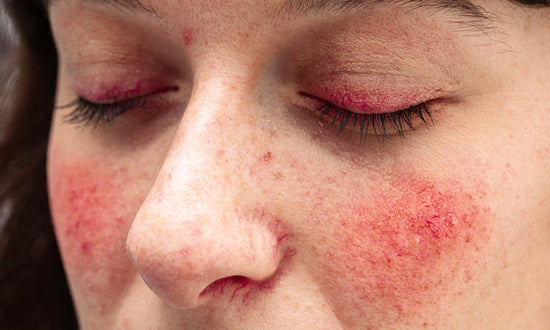 What is rosacea or couperose: treatment and experiences
How is rosacea treated?
When treating rosacea, it is particularly important to avoid triggers in cosmetics, diet, or the environment. Rosacea triggers can worsen redness and other symptoms. The severity of the triggers varies greatly from person to person. Some people with rosacea can even tolerate some of the known triggers.
Depending on the severity, there are also drug-based or surgical therapies available.
There are several things to consider when choosing cosmetics for rosacea, as many ingredients in cosmetic products can trigger flare-ups. With the right rosacea care, including soothing and anti-inflammatory ingredients, and appropriate makeup, redness can be reduced or concealed. This can lead to greater well-being and a more relaxed state of mind.
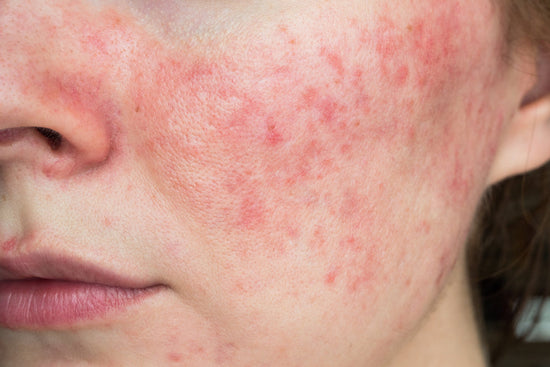
Rosacea care: No more redness - finally inflammation-free skin
Pros and cons of natural cosmetics for rosacea
The following advantages and disadvantages of natural cosmetics for rosacea are very general. Basically, all ingredients in natural cosmetics can also be found in conventional products. The reverse is not true. This means that all arguments against natural cosmetics can also apply to conventional products.
On the other hand, natural cosmetics can also be produced in a completely different way, thus eliminating the negative properties of natural cosmetics. We have proven this with Xeno.
 Natural cosmetics: Are all products truly safe?

Switching to natural cosmetics: 4 steps to your natural cosmetics for sensitive skin
Pro natural cosmetics
- Genuine natural cosmetics inherently avoid certain trigger factors that can be found in conventional cosmetics. These include cortisone, perfume, PEGs, parabens, mineral oil, urea, and silicones.
- Some natural ingredients that are also used in natural cosmetics, such as green tea , oats, horse chestnut or licorice root , are very suitable for rosacea.
- It has nothing directly to do with rosacea: natural cosmetics are more sustainable than conventional cosmetics.
Against natural cosmetics
However, many ingredients commonly found in natural cosmetics can also be trigger factors for rosacea and couperose:
- Natural fragrances , such as essential oils (e.g., linalool) and floral hydrosols, like rose water or witch hazel water, are not only strong allergens but can also significantly worsen rosacea. Even for people without rosacea, essential oils are not a healthy choice because, when exposed to sunlight, they become stressors and generate free radicals. This is stressful for both rosacea sufferers and all other skin types. In the long term, essential oils can also trigger contact allergies.
 Don't be fooled: seductively scented cosmetics with essential oils are harmful to your skin.

All-rounder or myth: Is rose water good for the skin?
- Alkaline cosmetics: Many natural cosmetic products do not match the skin's pH value, which is between 5 and 6. Some natural cosmetic products, such as soaps, have a pH value of 8 or higher. This attacks the skin's protective acid mantle , making it more susceptible to germs. Soaps also contain very harsh surfactants, which further dry out the skin. It is often claimed that particularly rich natural soaps do not dry out the skin. Unfortunately, this is not the case. The same applies to soaps supposedly formulated for sensitive skin: these should also not be used by people with rosacea. Soap is not a gentle way to cleanse the face .

- Drying alcohols : Natural cosmetics are often preserved with alcohol. Many alcohols dry out the skin and can therefore irritate it.
- Unprocessed (plant or animal) oils and fats: Under a layer of oil, rosacea-prone skin can begin to sweat. This heat buildup can lead to excessive blood flow and intense redness of the skin, resulting in what is known as flushing. Here you can learn more about the advantages and disadvantages of oils.
 Is facial oil good or bad? 15 benefits of facial oils put to the test.
- Mechanical scrubs contain excessively large, sharp-edged exfoliating particles that can damage your skin. They can create micro-tears in your skin that are invisible to the naked eye. These are ideal entry points for germs, which can lead to inflammation. This also applies to clay/healing clay products or those containing salt or sugar granules.
- Fruit acids: Pineapple, papaya, hibiscus extract, and other fruit acids act like strong chemical peels (which are not particularly suitable for couperose), but with the added disadvantage that the natural acid content can vary greatly. These products can therefore be far too acidic for the skin in some cases – especially for those with rosacea.
My experience with natural cosmetics for rosacea
I first became aware of my rosacea when I tried to switch my skincare and makeup completely to natural cosmetics . Suddenly my skin turned red and I got pimples. Not typical hormonal pimples, but small red pustules.
When I went back to using my usual pharmacy products, which I hadn't changed in years, the problem suddenly disappeared. My skin was fine again. However, I personally felt uncomfortable supporting brands that conduct animal testing and use unsustainable ingredients. It was a real dilemma for me.
So, is natural cosmetics unsuitable for rosacea?
Many have given up, believing that natural cosmetics don't work for rosacea. And if you look at the natural cosmetics market, you quickly realize that it's almost impossible to find products that don't contain the aforementioned triggers. Some niche brands are now foregoing essential oils altogether or at least reducing their use – however, the problem of plant oils, flower hydrosols instead of water, fruit acids, pH levels, stimulating extracts, etc., often used without consideration for rosacea usually remains.
This isn't because it's fundamentally impossible to produce tolerable natural cosmetics for rosacea. Just because many natural substances are irritating to the skin doesn't mean they have to be used. It requires a different mindset to create natural cosmetics for rosacea and sensitive skin. That's why it's part of our philosophy that all Xeno products should be as well-tolerated as possible by all skin types.
Natural cosmetics without rosacea triggers
Facial care for rosacea with natural cosmetics
There are good alternatives to plant oils in natural cosmetics: Caprylic/Capric Triglycerides , squalane , and lecithin are plant-derived and processed to closely resemble or match the natural oils in the skin. This allows the skin to fully absorb these oils, especially if its own oil is lacking. These oils, when used in natural cosmetic creams, can protect your skin from moisture loss. However, creams specifically formulated for couperose should be very light and contain a high proportion of water along with moisturizing agents such as hyaluronic acid or glycerin .
For gentle preservation , there are moisturizing alcohols that are also well-tolerated by rosacea: One example is the fatty alcohol pentylene glycol . It naturally moisturizes your skin while simultaneously acting as a preservative. Pentylene glycol is very mild and extremely well-tolerated, even by very sensitive skin, and is therefore recommended for rosacea.
 Pentylene Glycol: mild preservative for sensitive skin
 Sodium Levulinate: Mild preservative for baby products

A gentle cleanser for rosacea should contain only very mild surfactants . Mild sugar surfactants are among the most tolerable.
You can also wash your face with a cleansing oil. These shouldn't consist of pure oils but should always contain a skin-friendly emulsifier. Cleansing oil is particularly useful when wearing heavy makeup. The plant oils it contains aren't always easy to wash off the skin. Many people with rosacea therefore don't tolerate cleansing oils very well.
Tip: For heavier makeup, you can also use natural shea butter or jojoba oil, if you tolerate them. Afterwards, you should wash off the oily residue with a mild cleanser based on sugar surfactants .
 Facial cleansing: The foundation of your skincare routine
To soothe the skin, natural cosmetics for rosacea should contain antioxidants and calming ingredients such as green tea , oats, licorice root , or bisabolol. Fermented lactic acid bacteria strengthen the microbiome and reduce harmful bacteria. This can reduce redness and make the skin less sensitive.
 Green tea: The best-researched antioxidant
 Licorice root: An underestimated active ingredient, not only for hyperpigmentation

Vitamin C derivatives also strengthen the skin and make it more resilient to environmental stressors. Please test how well you tolerate vitamin C derivatives individually. Pure vitamin C (ascorbic acid) is too potent for most people with sensitive rosacea-prone skin and is therefore not recommended.
 Vitamin C for sensitive skin: Ascorbic acid or derivatives?
Sunscreen is important for preventing skin cancer and is also the best "anti-aging remedy" because it slows down the formation of age spots and wrinkles. Sunscreen is even more important for rosacea because the sun can be a trigger.
Finding a well-tolerated sunscreen for rosacea is generally difficult, and even harder when the selection is limited. Sunscreen needs a film-forming agent so that the sun protection factors can be distributed evenly on the skin. Therefore, sunscreens inevitably contain plant oils, silicones, mineral oils, alcohol, or other film-forming agents, all of which are known rosacea triggers. Some sunscreen filters can also be rosacea triggers. That's why it's important to find the sunscreen that works best for you individually. Because the best sunscreen isn't the natural or conventional one, but the one you wear regularly.
Get our free sun protection guide for sensitive skin here.
Here you will find tips and sunscreens from various brands that are also suitable for rosacea, so that you can find the right sunscreen for you.
By registering, you confirm our Privacy Policy .
You will receive a confirmation email shortly. Confirm in the email that we may send you messages and download the sun protection guide.
 History of sunscreen: Why our ancestors didn't need it – but we do.
Natural cosmetics makeup for rosacea
Natural cosmetic makeup usually contains many plant oils and butters, which should be taken into account. Furthermore, there are very few products without exotic extracts, fruit extracts, essential oils, etc.
The most tolerable option for rosacea is mineral makeup in powder form, which consists solely of natural, non-reactive mineral pigments. While this slightly limits the possibilities for look and application, it's always a solution if other makeup products aren't working. Incidentally, mineral powder makeup contains zinc oxide, which can reduce papules and pustules because it counteracts inflammation.
When choosing cream products, it's worth paying attention to the amount of plant oils they contain. Those who tolerate certain plant oils can, of course, look for makeup containing those oils.
Tip: Instead of makeup, you can use a tinted sunscreen. The mineral filters in natural sunscreens are usually well-tolerated, you need one less product, and the tint prevents a white cast. A potential drawback is the oil content. See also the section on skincare above.
Unfortunately, there isn't much natural cosmetics makeup that's well-suited for rosacea yet. Don't put pressure on yourself: especially with makeup, it's okay to compromise if the market doesn't offer what you're looking for.
Natural cosmetics for rosacea
- Tags: Hautkrankheiten, Hautpflege, Make-Up, Naturkosmetik, Rosacea
← Older Post Newer Post →



0 comments