
Easy Peasy You
Rosacea care: No more redness - finally inflammation-free skin
Posted by Lara Schimweg on
Is there really no solution for my rosacea?
Your feeling is right: rosacea doesn't need many products to be soothed. You can start with a simple rosacea care routine consisting of a calm basic cream and a mild cleanser. Actively reduce redness with an active ingredient treatment specifically for rosacea / couperose.
Care routine for rosacea / couperose that delivers results
Why does this routine work for rosacea care?
Avoid rosacea triggers. These include, for example, fragrances, harsh surfactants or mineral oil.
Use compatible products, ideally with skin-friendly active ingredients that don't trigger your rosacea. For example, green tea, azelaic acid, or horse chestnut.
Strengthen your skin's microbiome with probiotics, such as Lactobacillus Ferment and a skin-friendly pH value, so your skin becomes free of redness.
Couperose or rosacea can be really uncomfortable and severely affect well-being. The skin is extremely sensitive with so-called "Kupferrose" (copper rose). The skin seems to react to everything. Therefore, a closer look at cosmetic products is worthwhile: Finding suitable skincare for rosacea can be like the proverbial search for a needle in a haystack. Here you'll find all the information and your suitable skincare routine.
What is rosacea or couperose?
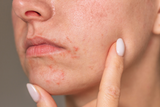
Rosacea is a skin condition with facial redness, often accompanied by inflammatory papules and pustules. Other names are couperose or the German terms Kupferrose, Kupferfinne, or Rotfinnen.
Couperose usually only starts from the late 20s or early 30s. This makes it particularly difficult for many people with couperose, because many had hardly to worry about skincare and makeup until then and are now faced with the question: Which cosmetics for rosacea?

How is rosacea treated?
If you have been diagnosed with rosacea or if you suspect that rosacea is the explanation for your altered skin appearance with redness, enlarged capillaries, or pustules: don't stress yourself out at first: If you take good care of your skin, you have good options. Rosacea is a very individual skin story, for which there is no blanket solution. And you will find your own way to deal with couperose.
An important part of rosacea treatment is to avoid triggers, as these can worsen redness and other symptoms.
There are different stages of rosacea / couperose. And depending on the stage, treatment with medication, laser treatment, or even surgery can be useful. Discuss this with your dermatologist.
A significant part of the treatment is always cosmetics for rosacea. On the one hand, because many triggers can be contained in cosmetic products, and on the other hand, because the right skincare can soothe the skin and makeup can significantly improve the quality of life. This article is about couperose care. An article on makeup for rosacea will also be published here soon.
Facial care for rosacea
The most important thing in caring for rosacea is to completely omit possible triggers. Unfortunately, there can be many of these.
In the next sections, you will learn which cosmetic ingredients can trigger rosacea. In the second part, you will learn which active ingredients and which rosacea skincare products can work well.
Avoid rosacea triggers
Unfortunately, there are a lot of products on the market that claim to be mild and low-irritant, but which, unfortunately, are usually not at all suitable for rosacea.
If you have rosacea, you will not tolerate many ingredients in cosmetic products on your skin. And unfortunately, it can also happen that products that work for other people with rosacea are not necessarily the right solution for you. If you react to skincare products or if you feel that your rosacea is being aggravated, it is best to stop using the products immediately. When it comes to rosacea - as with sensitive skin in general - your own skin is and remains your best advisor. You should definitely listen to its honest feedback.
Listen to your skin's feedback
As a guideline, you can use the following list of potential rosacea triggers. Try to avoid these triggers as completely as possible.
Cosmetic ingredients that can trigger rosacea
The following ingredients are triggers for most people with rosacea / couperose. Click on an ingredient to go directly to the corresponding section.
For the following ingredients, it's individual: some people with rosacea tolerate them, others don't. Here you can test if you tolerate them. Some of these ingredients can indeed have positive properties. Sometimes it also depends on the quantity.
There may be situations where you can't find a product that meets all your requirements. Sun protection is one of the most difficult topics here. Sun protection can hardly be produced without rosacea triggers while providing sufficient sun protection factor. However, sun protection is particularly important for rosacea. That's why we have created a sun protection guide for sensitive skin. For such products, unfortunately, the only thing that helps at the moment is to try them out.
Cortisone
Caution: Sometimes dermatologists prescribe cortisone creams when rosacea has not yet been clearly diagnosed. If you have rosacea or think you might have it, it's better not to use cortisone, as it can trigger rosacea. It's best to find a dermatologist who is well-versed in rosacea.
Fragrances
You should definitely avoid fragrances in all your cosmetic products. However, fragrances do not only mean conventional perfume. In conventional natural cosmetics and also in many conventional products, essential oils are often used instead of perfume. These are also fragrances, are usually even more irritating, and can trigger your rosacea.

pH value too high or too low
Rosacea reacts very sensitively to basic/alkaline skincare products. Soaps, for example, are basic and can make your skin very sensitive. But products that are too acidic, such as acid peels, can also be problematic. Your skin's natural pH value is approximately 5.5. And you should definitely maintain this, because it also keeps the acid mantle intact. This protects your skin from bacteria and viruses. Alkaline skincare can attack the acid mantle and dry out the skin. As a result, pathogenic microorganisms can settle more easily.
Aggressive Surfactants
Make sure that your facial cleanser does not contain any aggressive surfactants. You can recognize very strong surfactants by these names:
Sodium Lauryl Sulfate (SLS)
Sodium Laureth Sulfate (SLES)
These harsh surfactants strip your skin of too much oil and make it more sensitive, so your rosacea could flare up again more quickly.
Also beware of
- Cocamidopropyl Betaine (not to be confused with moisturizing Betaine)
While this is a mild surfactant, it can often cause contact allergies. Since the skin barrier is weakened in rosacea, the risk here is higher.
You can find more about surfactants and cleansing in these articles:

Dehydrating Alcohols
Many alcohols are drying. They are used in many cosmetic products. But why? Sometimes they are used to improve the texture of products or they are used to allow certain active ingredients to penetrate deeper into the skin. In conventional natural cosmetics, drying alcohols are often used as preservatives to replace parabens, which are not allowed in natural cosmetics. These types of alcohols unfortunately dry out your skin. Through regular use, you would constantly strip your sensitive skin of necessary oils. But your skin needs oils to retain moisture. If too much oil is removed, your skin loses too much moisture during the day. And your skin then tries to compensate for this imbalance between constantly lacking moisture and regular oil removal by simply re-oiling uncontrollably. Because your skin is no longer in balance, it can react more sensitively to environmental stimuli. Redness or inflamed pustules can occur more easily, causing your rosacea to flare up. And you want to avoid all that. Therefore, it is best to consistently avoid skincare and cosmetic products with drying alcohols. You can recognize drying alcohols in the INCI list by the following names:
- Alcohol
- Alcohol denat.
- Denatured alcohol
- Ethanol
- Isopropanol
- Isopropyl alcohol
- SD alcohol 40
- SD alcohol
- Propanol
- Propyl alcohol
Note: Not all alcohols are problematic. So-called fatty alcohols can even provide moisture and are therefore good helpers in skincare. But: Cetearyl Alcohol can lead to irritation in rosacea, even though it is a fatty alcohol.
More about fatty alcohols below in the section on proper preservation.
Mineral oil
Mineral oils are too heavy for rosacea. They sit on your skin and trap it. In the worst case, this can overstimulate blood circulation, leading to flushing or new inflammation. You can recognize mineral oils, for example, by the following names in the INCI list:
Mineral Oil
Petrolatum
Paraffinum Liquidum
Paraffinum Subliquidum
Cera Microcristallina
Microcrystalline Wax
Ozokerit
Ceresin
Vaseline
Urea
While urea can be very helpful for sensitive neurodermatitis, rosacea is triggered by urea. Urea is too rich and occlusive for couperose and causes inflammation to flare up.
Mechanical irritations and peels
Mechanical peels should be a clear taboo for your skin. They contain sharp-edged exfoliating particles that can injure your skin. Micro-tears can occur in your skin that you cannot see with the naked eye. And these are ideal entry points for germs that can cause inflammation. You also won't be able to easily regulate the pressure with your hands. Too much pressure overstimulates blood circulation. This causes your blood vessels to dilate and your face to redden. And with rosacea, you should definitely avoid constant blushing, as the blood vessels become weakened and may then remain dilated. This would result in your face staying red. Therefore, it is best not to use such mechanical peels:
vigorous rubbing of the skin with a towel or muslin cloth
mineral clay / healing clay or chalk (also dry out the skin if you use them pure. In makeup or other products, these substances can sometimes also occur in very finely ground form and are then unproblematic)
apricot kernels or other harsh exfoliating particles
DIYs with salt, sugar and co.
loofah sponges
face brushes
konjac sponges
Tip: Plant fiber sponge
Our plant fiber sponge is a mild and sustainable alternative to mechanical peels, konjac sponges & Co.
- Double pack
- Washable at 60°C
- Plastic-free
- vegan
Fruit Acids and Fruit Extracts
In natural cosmetics, fruit acids or fruit extracts are often used, such as pineapple, papaya, or hibiscus extract. These act as peels similar to AHAs. Unfortunately, they have the disadvantage that you don't know the exact concentration of natural active ingredients in your product. And the natural acidity of fruit extracts can vary greatly. The acidity can be subject to natural fluctuations. So, if you have rosacea, avoid fruit extracts like these:
Papaya extract
Hibiscus extract
Pineapple extract
PEGs (individual)
Derivatives of PEG (polyethylene glycol) are used in cosmetics as emulsifiers. Some skin types tolerate them without problems. However, rosacea has difficulties with PEG substances, as they make the skin more permeable to other substances. PEG substances also wash too many good fats from your skin, which could then be a trigger factor for your rosacea. In the worst case, this can fuel inflammation. This should be avoided. Therefore, it is best to look for skincare without PEG.
Incidentally, no PEGs are used in genuine natural cosmetics, and at Xeno, we only use skin-identical emulsifiers.
Parabens (individual)
In conventional cosmetics, skincare products are often preserved for a very long time with parabens. In natural cosmetics, parabens are not allowed. Parabens are synthetic preservatives. They are excellent at fighting all kinds of germs and thus ensure that your skincare lasts an extremely long time even after opening. However, parabens are suspected of potentially affecting the hormone system. This does not necessarily mean that parabens are harmful, but for sensitive skin and especially for rosacea, it can be advisable to avoid parabens if possible.
Unprocessed Oils and Fats (individual)
You've probably noticed that some creams feel too heavy on your sensitive skin. If your skincare contains too many greasy plant oils, waxes, or butters, it can trigger your rosacea.
Too much fat lies heavily on your skin. Under such a fatty layer, rosacea skin can start to sweat. Such a heat buildup can cause your circulation to be overstimulated and your skin to flush intensely – this is known as a flush. Facial redness often leads to inflammatory processes that exacerbate your couperose.
Remember: an unprocessed plant oil contains not just one ingredient but a variety of different nutrients, fats, and vitamins. Don't misunderstand: these substances can also be very good for the skin. However, especially with rosacea, unprocessed oils can also overwhelm the skin. With an oil blend, your skin has to deal with even more ingredients. And you don't know what you tolerated from the blend and what you didn't.
Pure oils should generally never be applied directly to dry skin. They can dry out the skin in the long run. Facial oils should only be applied to damp skin and ideally always over a cream.
Unprocessed plant oils are also often a component of creams. It may be that the amount is so small that you tolerate the cream well. You should try this out individually.
It may be that you tolerate some oils. But always try only one oil at a time and do not otherwise change your routine. Here are a few plant oils that are usually better tolerated:
Jojoba Oil (for combination and slightly dry skin; resembles the skin's sebum)
Hemp oil (for rather oily skin prone to pimples and inflammation, contains linoleic acid)
-
Rosehip seed oil (also called Rosehip Oil or Wild Rose Oil; can be an alternative to hemp oil, but has a stimulating effect and can therefore sometimes trigger a rosacea flush)
Find out what works best for you and your skin: Plant oils, unlike silicones, also have a nourishing effect because they contain nutrients and vitamins. However, with rosacea, you should be careful with unprocessed plant oils, whether pure, in creams, or in oil blends.
There are also alternatives to unprocessed plant oils that are usually better tolerated by sensitive skin. More on that below.


Silicones (individual)
Creams with silicones often feel very light. Unfortunately, silicone should be used with caution on sensitive rosacea skin. Some people with rosacea do not tolerate silicones. This is very individual. And not all silicones are alike. Silicones are used in skincare, among other things, to prevent the skin from losing moisture. This can work well for many skin types, and especially very oily skin types usually benefit from oil-free products because oily skin often tolerates little fat. Incidentally, a mild moisturizer without oil and silicone can help here, because it can combine with the natural fat on the skin. Because oily skin does not necessarily need a cream if it does not feel tight, which would indicate a lack of moisture.
In natural cosmetics, there are no silicones. However, it can sometimes be difficult with plant oils.
You can identify silicones in the INCI list by names like these:
Dimethicone
Methicone
Polysiloxane
Cyclomethicone
Potent Active Ingredients (individual)
Since rosacea is very sensitive to any stimuli, potent active ingredients can already be too much.
For example, some people with couperose tolerate Niacinamide very well, while others react very sensitively to it and experience increased pustules, redness, and inflammation. If you want to start with Niacinamide, only use low concentrations under 5%. Listen to your skin's feedback. If the concentration is not indicated, do not use the product, as concentrations of 10% Niacinamide or more are also available on the market.
Some cope well with low doses of retinol, and it can reduce rosacea symptoms. Others react even to the smallest amounts. However, there are enough more tolerable alternative active ingredients. Therefore, as a precaution, we recommend avoiding retinol for rosacea.
Incidentally, you should not use retinol during pregnancy. It is a very potent active ingredient and could harm the unborn child.
It's also very individual with Vitamin C. It can reduce skin stress and can be a good substitute for exotic plant extracts, which can also be triggers. Only a few people with rosacea tolerate (highly dosed) Ascorbic Acid. It is too strong, even if it is considered very potent and effective. If you want to use Vitamin C for rosacea, you should always use Vitamin C derivatives (compounds derived from Vitamin C that are milder, but also slightly less effective than Ascorbic Acid with the INCI Ascorbic Acid). And make sure you use Vitamin C as a standalone product. Vitamin C is simply added to many creams. If you don't notice this when buying, it can quickly happen that you use Vitamin C multiple times and then react with redness. Here you can find more about Vitamin C for sensitive skin and the different Vitamin C derivatives.
And here too: Always pay attention to what your skin tolerates. It's quite possible that you will find the optimal amount for your skin.


Chemical peels (individual)
With chemical peels, it's better to be cautious. You shouldn't peel your skin too often. A too high concentration can also irritate your skin. Some sensitive skin with rosacea doesn't tolerate chemical peels at all. Furthermore, acid peels can be too much for the skin. In the worst case, your skin becomes even more sensitive and you could also develop perioral dermatitis.
These are typical acid peels that are often recommended for pimples and pustules and can cause individual problems with rosacea:
- Salicylic acid (BHA, Beta-Hydroxy-Acid) They are tolerable for some people with rosacea, but not for many. Tip: Not during pregnancy and breastfeeding; also pay attention to your cleanser: many cleansers contain BHAs.
- very small glycolic acids (AHA, Alpha Hydroxy Acid) - You should definitely avoid this acid. AHAs are much too small and extremely irritating for sensitive skin and for rosacea.
Some people can cope quite well with the larger glycolic acids (Lactic Acid, Mandelic Acid) in low doses because they cannot penetrate as deeply into the skin. However, be aware that every acid peel stimulates blood circulation in the skin, which you should definitely avoid with rosacea. Chemical peels interfere more extremely with the natural skin cycle.
A mild acid alternative to AHAs are PHAs (Poly-Hydroxy-Acid). While these also stimulate blood circulation, they are a natural component of the skin and therefore significantly milder on the skin and thus also suitable for rosacea. They are as effective as potent AHAs. It just takes a little longer for PHAs to show results.
Better tolerated than acid peels is an enzyme peel, provided it does not contain other irritating ingredients.
Do you find this article helpful? Then feel free to send it to a loved one who might also find this information useful.
Soothe skin: Properties of good facial care for rosacea
Up to this point, it has primarily been about omission. You can probably achieve a lot with that alone. But how do I find the right rosacea care?
Useful ingredients for rosacea care
Your skin needs facial care that soothes your skin, inhibits inflammation and strengthens blood vessels. Therefore, look for skincare with soothing and anti-inflammatory ingredients.
Soothing and anti-inflammatory ingredients for rosacea
- Green tea: contains catechins (healthy bitter substances), has antioxidant, soothing, anti-inflammatory effects and balances skin lipids (contained in Swet Sugar Hug, Cosy Cocoon, Basis Creme and Minimalism)
- Black tea: contains many secondary plant compounds (polyphenols) that counteract oxidative stress, soothes red, stressed skin, naturally contained catechins and favonoids inhibit infections and have a natural antibacterial effect against germs (contained in Tea Break and Effort Less)
- White tea: rich in secondary plant compounds (polyphenols) that strongly counteract oxidative stress, contains even more catechins (healthy bitter substances) than green tea (contained in Minimalism)
- Oats: have a soothing and anti-inflammatory effect, contain beta-glucan (INCI: Colloidal Oatmeal) (contained in Cosy Cocoon)
- Beta-glucan: very long-lasting moisturizing (contained in Cosy Cocoon)
- Q10 (INCI: Ubiquinone): is a very well-tolerated endogenous substance. Q10 has anti-inflammatory, antioxidant effects, promotes cell renewal and increases elastin production. (contained in Human Glow)
- Vitamin E (INCI: Tocopherol): is antioxidant, skin-soothing, skin-smoothing, enhances the effect of sunscreen, improves moisture in the stratum corneum, promotes cell renewal, improves wound healing and reduces scarring (contained in Human Glow)
- Bisabolol: has an anti-inflammatory effect (can be obtained from chamomile. Chamomile hydrolate, chamomile extract and chamomile oil are not recommended for rosacea, as they contain essential oils)
- Licorice root: strengthens blood vessels (INCI: Dipotassium Glycyrrhizate or Glycyrrhiza Glabra (Licorice) Root Extract) (contained in Cosy Cocoon and Stay Kind)
- Panthenol: wound healing (contained in Minimalism)
- Pur Pur Red Algae: strengthens the vascular system, moisturizes, has antioxidant effects against skin stress and reduces redness (contained in Minimalism)
- Horse chestnut extract: has anti-inflammatory and antioxidant effects against skin stress, reduces redness because it contains the active ingredient Ectoin, which contributes to healthy blood circulation and strengthens capillaries (contained in Minimalism)






Active ingredients for rosacea
Some active ingredients can help alleviate rosacea symptoms. These include:
- Azelaic acid: reduces redness and pustules, but it is an acid and can therefore also dry out the skin - in which case the entire skincare routine should be adjusted accordingly. Many are familiar with this active ingredient from medical creams for rosacea. For milder forms of rosacea, it is also worth considering a product with a mild azelaic acid derivative (contained in Minimalism) or an enzyme peeling.
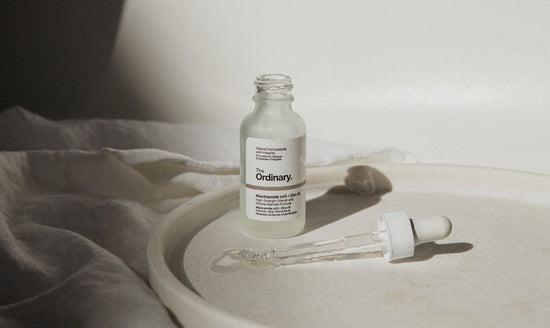
- Niacinamide: Vitamin B3 has a very individual effect on rosacea. Therefore, it appears both among potential triggers and here among active ingredients. It can help reduce symptoms. If you want to try niacinamide, make sure the concentration is low, up to a maximum of 5%. Studies have shown that at higher concentrations, the effect can be reversed. Unfortunately, many products do not specify the amount contained. We generally advise against such products, especially for rosacea. (Lean Back contains 3.14% niacinamide)
- Fermented lactic acid bacteria: strengthen the microbiome and reduce bad bacteria. The skin becomes less sensitive and redness is reduced. (INCI: Lactobacillus Ferment) (contained in Bright Head, Cosy Cocoon and Basis Creme)

Moisturizers for rosacea care
Moisturizing agents are also important. However, you should not overdo it here. If you layer too many toners, serums and creams, sensitive rosacea skin can become over-cared for. Well-tolerated moisturizers include:
- Hyaluron: is an endogenous moisturizer and is very well tolerated. However, one hyaluronic acid serum is sufficient, because with larger amounts, hyaluronic acid can also be too much. No more hyaluronic acid should then be present in the other skincare products. (contained in Bright Head)
- Glycerin: is also an endogenous moisturizer that is very well tolerated (contained in Cosy Cocoon and Basis Creme)
- Ectoin: reduces skin redness, soothes and provides long-lasting moisture, smooths rough, flaky skin, acts against harmful environmental influences and reduces the entry of allergens into the skin, protects against stress, prevents environmentally induced skin aging, regenerates, prevents UV-induced skin damage at the cellular level, strengthens the skin's own defense system, repairs the skin barrier (Contained in Minimalism, Lean Back and Stay Kind)
- Betaine: is also a very well-tolerated, long-lasting moisturizer. Betaines can soften surfactants and are therefore often found in mild cleansers. The special feature of betaine is that it is an osmolite: a molecule that can control the water balance of cells. It draws water away from the protein surface and protects the skin from dehydration, thus increasing its stability. (Contained in Lean Back)
- Zinc PCA: is an endogenous moisturizer. Zinc PCA is very useful for skin prone to pimples and acne, as it inhibits the growth of acne bacteria. This is because it has strong antimicrobial activity against P. acnes. (Contained in Lean Back)

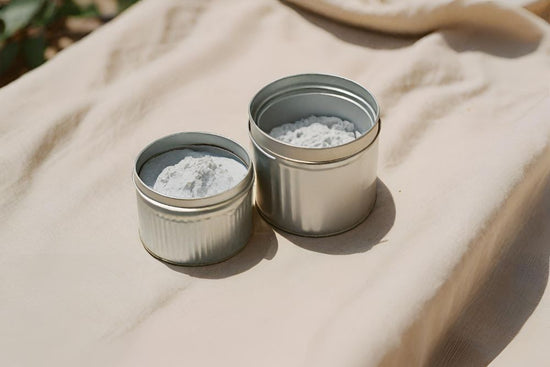


Alternatives to unprocessed vegetable oils
A good alternative to unprocessed vegetable oils are plant-derived processed oils. These oils have been processed in such a way that they correspond to or are very similar to the fat in the skin. This allows the skin to fully absorb and metabolize these oils if it lacks fat. No irritating plant substances are contained anymore. Examples:
- Neutral oil (Caprylic / Capric Triglycerides)
- Squalane
- Lecithin
- Linoleic acid or Vitamin F (Linoleic Acid)
- Linolenic acid (Linolenic Acid)

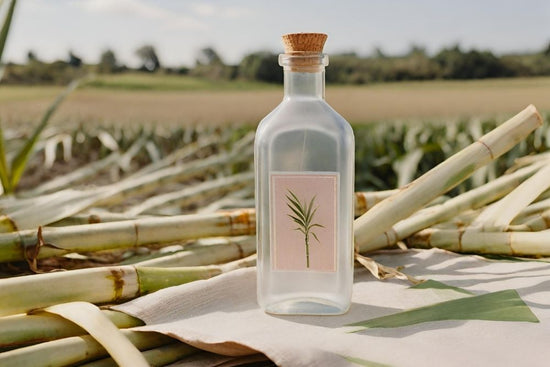

Tips: Compatible oils
Human Glow - Universal Serum-Oil consists of neutral oil, squalane, linoleic acid, linolenic acid with Q10 as an active ingredient and antioxidant. So like a vegetable oil, but better tolerated.
Save The Ocean is a pure squalane from sugarcane. For every Save The Ocean sold, we donate €5 to shark protection.
Digression: Water or plant juices?
In natural cosmetics, plant juices are often used as a water substitute. Plant juices are generally not necessarily better or worse. It depends individually on whether you tolerate the respective plant juice or not. Since all skin tolerates water, water is in no way wrong for rosacea. Some people with couperose tolerate plant juices without problems. If this is the case for you, your skin can, for example, benefit from natural aloe vera juice. Plant juices contain many antioxidants that additionally protect your skin from environmental influences and make it more resistant. Always pay attention to good quality here. Natural aloe vera juice should always be paired with good moisturizers such as glycerin or hyaluronic acid so that your skin is well moisturized and you get some of the effect.
Only floral hydrosols should definitely be avoided for sensitive skin and especially for rosacea. Floral hydrosols, such as rose water, orange blossom water or witch hazel water irritate your couperose and can trigger inflammation. Unfortunately, rose water is often recommended by many brands and also in poorly researched articles for soothing very sensitive skin and also for rosacea. Unfortunately, floral hydrosols are also often used in creams and toners as a substitute for water. Instead of rose water or other floral hydrosols, use low-irritant moisturizing toners, serums or essences that also contain well-tolerated moisturizers. This way you can give your skin additional moisture if your cream is not enough. Because with rosacea, it is sometimes better to make one step into two steps: Your skin gets sufficient moisture from oil-free toners or serums. A light cream that does not lie heavily and does not make the skin sweat is then applied over it. This way, not too much fat gets onto the skin, heat build-up is avoided and your skin is calmed.


The right preservation
Parabens, drying alcohols and phenoxyethanol can trigger rosacea. Is it then not best to completely avoid preservatives? No, your skin care should always be sufficiently preserved, otherwise bacteria or fungi can develop in your skin care. These would only cause stress for your rosacea again. Inflammation on your skin would have an easier time. Look for mild preservatives. There are good moisturizing alcohols (so-called fatty alcohols) that you tolerate well even with sensitive rosacea skin. Don't worry, these are not the drying alcohols mentioned above:
- Pentylene Glycol is a fatty alcohol. It naturally provides your skin with additional moisture and also has a preservative effect. Pentylene Glycol is very mild and extremely well tolerated even by very sensitive skin, which is why it is highly recommended for rosacea. That's why we at Xeno use Pentylene Glycol for mild preservation.
Some natural cosmetic brands unfortunately don't take preservation seriously enough. However, it is really important here, as natural products in particular can spoil quickly. It is not enough if cosmetics are only protected against bacteria and not against fungi. Because fungi can multiply quickly if you use your products for a while. Skincare for rosacea should therefore definitely be mildly and tolerably preserved.


Natural cosmetics for rosacea
Should I rather use natural cosmetics for rosacea? This question can only be answered with a clear "yes and no". As you have already read above, there are many natural ingredients that are not suitable for rosacea. These include essential oils, floral hydrosols, alcohols and also vegetable oils. However, many conventional care products contain mineral oil or silicone, synthetic fragrances. Therefore, the transition to natural cosmetics is sometimes really difficult. Our opinion on this: Natural cosmetics are a very good option if irritating ingredients are omitted. However, this is unfortunately very rare and hardly any brand is consistent in this regard. In our article on natural cosmetics for rosacea you will find more information.
All Xeno natural cosmetic products are mild, because skin compatibility and health are most important to us.


Less is more with rosacea
With rosacea, less is more. This gives you much more control over what goes on your skin. Too many different products, each with a different effect, could have a negative impact on your rosacea. And you could easily lose track of what is good for your skin and what is not.
Rosacea skincare products
Even if it's difficult to avoid all ingredients, you can pay attention to a few things that will make your search for suitable rosacea skincare easier. With the following tips, you'll find suitable skincare products that will soothe your couperose. We suggest specific products for your routine.
Mask for rosacea
Facial cleansing for rosacea
Rosacea skin needs very mild cleansing. If you like to cleanse your skin with cleansing oils, they should contain a compatible emulsifier so that you can wash off the oil completely. This is because an oil film could cause inflammation again. However, some people with rosacea do not tolerate the unprocessed vegetable oils, which dissolve make-up well, in oil cleansers very well. Even more tolerable in this case are cleansers that contain very mild surfactants. Mild sugar surfactants are among the most tolerable.
Game Changer is a mild gel-to-milk cleanser with mild sugar surfactants. It has an "emollient effect" and is particularly suitable for dry skin.
Caring Cloud is a very mild cleansing gel with a brightening effect thanks to rice water. Caring Cloud is particularly suitable for combination and oily skin.
By the way: It's best to wash sensitive rosacea skin with lukewarm water, as cold and overly hot water stimulate blood circulation too much. If your skin reacts too strongly to hard water, you can use distilled water, which is available in any drugstore. Here you'll find more wonderful tips on how to cleanse your face and how to effectively soothe your skin with the right cleansing.
With rosacea, you should never use soap, as very strong surfactants are produced during soap making. In addition, the pH value of soaps, as mentioned above, is far too high.

Which cream for rosacea?
Creams are designed to prevent the skin from losing moisture. To stop water loss, ingredients are used that form a light layer on the skin. This can be oil, silicone or mineral oil. This keeps moisture in the skin longer. This is also called occlusion. However, occlusive creams are not suitable for skin with rosacea. The problem: neither mineral oil nor silicone or vegetable oils can be unrestrictedly recommended for rosacea. But what does that mean for your couperose skin care, when your skin can sometimes be a bit dry? Your cream can contain a little fat. It's best to look for well-tolerated fats in your cream. Naturally derived fats that are naturally present in the skin or are very similar to the skin's own fats are very well tolerated. But you don't need too much of these fats either:
- Squalane: similar to the skin's own squalene, can be extracted from e.g. olive oil or sugar cane
- Caprylic/ Capric Triglyceride
- Lecithin
Since rosacea usually doesn't like too much fat, thick, fatty creams or ointments are usually too much for your skin. Look for creams with a high water content.
Tip: Basic Cream
The Root and Grow Basic Cream is for anyone who only wants to put what their skin needs on their skin. A cream you no longer have to worry about. The cream contains very few ingredients, including squalane, green tea and lactobacillus ferment.
What is a good couperose serum?
A good serum for couperose or rosacea naturally contains no rosacea triggers. However, that alone doesn't help much. Then you could just skip a serum. It's best if the serum also contains active ingredients that strengthen your vascular system, reduce redness and inhibit inflammation (see "Useful ingredients for rosacea" above).
No matter which active ingredients you want to start with: always start with only one new product. Therefore, it is advisable that potent active ingredients, such as niacinamide or vitamin C, for rosacea are each in separate products. This way, if you don't tolerate them, you can simply discontinue them and your daily routine remains safe. If you add more products: Don't layer them all on top of each other, but alternate them on different days so you don't overwhelm your skin.
With microdoses of active ingredients (low concentrations), your skin will not be suddenly stressed, as would be the case with high-percentage boosters. The advantage of this approach is that your skin has the opportunity to gently get used to the more potent active ingredients. It may take a little longer to see results, but these are sustainable and healthy. Active ingredients should not overwhelm your skin, but rather support it so that you can work together to achieve long-term skin health.
If you feel that an active ingredient is not good for you, stop using it. Then give your skin a few weeks to calm down before trying a new potent product (with a low concentration). This way, you won't irritate your rosacea too much. Do not use potent active ingredients if the exact concentration is not specified.
Tip: Minimalism helps against redness and pustules
A serum roller that you can apply generously or selectively against redness, swelling or pustules.
Minimalism contains
- mild azelaic derivative
- panthenol
- purple algae
- ectoin
- green and white tea
Enzyme peeling for rosacea
Mechanical peels and (fruit) acid peels should be used with caution. Enzyme peels are better. They are the mildest way to exfoliate the skin, and rosacea usually tolerates them very well. But even here, less is more. Once or twice a week is perfectly sufficient. For all peels, whether lactic acid, PHAs or enzymes, make sure they do not contain additional irritating substances, such as flower extracts, clay, chalk, flower juices or potent active ingredients. Unfortunately, most enzyme peels are not pure but contain clay, chalk or other coarse minerals that can damage the skin.
Tip: Stay Kind - Pure Enzyme Peeling
- with skin-identical enzymes
- with soothing ingredients
- without fruit enzymes
- without acids
- without mechanical abrasives
Sun protection for rosacea
Sun protection is important for everyone to prevent skin cancer and is also the best anti-aging product, as sun protection prevents the rapid formation of pigment spots and wrinkles.
However, sun protection is even more important for rosacea, because the sun can worsen the symptoms. Unfortunately, many sunscreens contain one or more triggering ingredients, such as vegetable oil, silicone or alcohol. Some sunscreen filters can also be rosacea triggers. In this case, however, it is not advisable to simply avoid sun protection. You should look for a sunscreen that works individually for your skin or causes the least damage. Here are a few tips for narrowing down your search:
- If you can tolerate oils to some extent, you can try natural cosmetic sun protection. These do not contain chemical sunscreen filters. If the white cast of mineral sunscreen filters bothers you, you can use a tinted sunscreen. Be careful with natural cosmetics regarding essential oils and other irritating ingredients.
- If you tolerate chemical sunscreen filters, you may find what you are looking for in sunscreens from pharmacies. These are usually free of irritating ingredients. Pharmacies offer sunscreens with both silicone and oil.
Tip: Get our free sunscreen guide for sensitive skin here
Here you will find tips and sunscreens from various brands that may be suitable for sensitive skin and thus also for rosacea, so that you can find the right sunscreen for you. Learn more
By registering, you confirm our Privacy Policy.
You will receive a confirmation email shortly. Please confirm there that we are allowed to send you messages and download the sunscreen guide.
Example Routine for Rosacea
For a basic routine, we recommend our cleansers Caring Cloud or Game Changer and the Base Cream Root & Grow.
Since rosacea is constantly dehydrated, it needs an extra moisturizing serum that is specifically made for sensitive skin.
If your skin is very dry or if you also tend to have neurodermatitis in addition to rosacea, you can use Cosy Cocoon - Rich Cream instead of Root & Grow.
You can then supplement your basics as needed
- Human Glow (as needed) over the cream, if your skin needs more care (e.g. in winter)
- Stay Kind - Enzyme Peel 1-2 times a week to prevent flakes and pustules
- If you tolerate niacinamide in low concentrations, you can also try Lean Back (with 3.14% niacinamide)
Conclusion
Rosacea is very individual, and what works for one person may not necessarily be the perfect solution for another. However, you can already take tips from this article into account for your rosacea skincare. Always pay attention to how your skin reacts and adjust your skincare accordingly. Good luck.
How do you deal with this difficult issue? Have you already figured out what works well for you? Feel free to share your experience with rosacea / couperose in the comments.
Overview: 7 tips for your rosacea care
Avoid rosacea triggers: There are many ingredients in cosmetics that can worsen rosacea symptoms. Reduce your skincare to the essentials and discontinue products that aggravate your rosacea.
Only use skincare with a skin-friendly pH value between 5 and 6. Never use soap.
Only cleanse with mild surfactants
Use skin-identical / skin-like fats, such as squalane or neutral oil, whenever possible.
Good active ingredients include: azelaic acid, niacinamide, lactobacillus ferment, ectoin or panthenol.
An enzyme peel is the mildest and most tolerable peel, even for rosacea.

Lara Schimweg
Lara is the founder of Xeno and develops the skincare products. She studied sports science and health research and is a trained health and geriatric nurse. Lara mixed her first cream 20 years ago and is passionate about skincare and ingredients. Lara has rosacea and very sensitive skin.
- Tags: Hautpflege, Rosacea
← Older Post Newer Post →

4 comments
-
Sandee on
Das ist der beste Artikel bezüglich geeigneter/ungeeigneter Inhaltsstoffe bei Rosacea, den ich je gelesen habe. Vieles deckt sich auch mit meinen eigenen Erfahrungen. Es ist so schwer, passende Pflegeprodukte zu finden, weil ich auf so viele Sachen achten muss. Eigentlich fast unmöglich. Und ich ärgere mich immer sehr darüber, wie sehr die Leute verarscht werden (wenn man bedenkt, welche schlechten Inhaltsstoffe viele ausgewiesene Rosacea Produkte haben).
Ich werde hier sicherlich bald ein bisschen was bestellen. :) Liebe Grüße -
Lara on
Hey Marianne,
danke, freut mich sehr, wenn dir der Artikel weiterhilft. Klar, da werde ich nochmal drauf eingehen. Ist tatsächlich ein wichtiger Punkt mit der Kamille und auch da gibt es für Allergiker, empfindliche Haut und Rosazea eine paar mehr Stolpersteine. Super Einwand ;)
LG Lara :) -
Marianne on
Hallo Lara,
toller, informativer Artikel! Vielen Dank dafür. Ich recherchiere gerade auch viel zu den Inhaltsstoffen, damit ich nicht wieder etwas falsches erwische. Ich habe eine leichte Rosacea mit trockener, entzündlicher Haut. Kannst du bitte noch etwas zu dem Thema Rosacea und Kamillenwasser / Kamillenextrakt eingehen? Hatte bislang gedacht, dass Kamille nur positive Eigenschaften auf Rosacea hätte. LG Marianne
Hey Sandee,
vielen Dank und wie schön, dass der Artikel in deinen Augen hilfreich ist. Ich sehe das genauso wie du: Es ist wirklich mies, was zum Teil in Cremes ist, die “angeblich” für Rosacea funktionieren sollen. Klar Rosazea ist individuell. Ich denke mir dann trotzdem immer, naja die stehen ja morgens nicht mit frischem Flushing und Pusteln vor dem Spiegel. Ein bisschen mehr Rücksicht wäre auf jeden Fall wünschenswert. Und es ist ja nicht so, dass die Informationen nicht da sind. Deshalb war es mit sehr wichtig, das hier im Magazin einmal für alle Rosis da draußen zu bündeln und aufzuklären. Um so mehr freut mich über dein Kommentar hier. Ich freu mich wenn du im Shop vorbeischaust :)
Liebe Grüße, Lara :)